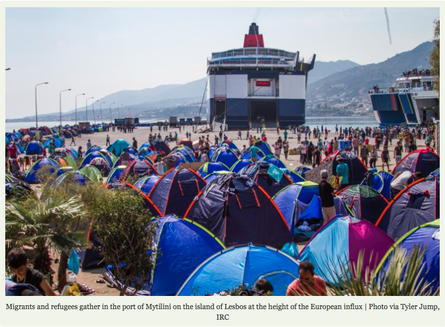
The majority of the world’s displaced (over 60% of refugees and 80% of internally displaced persons) now live in urban areas, while the humanitarian system has largely been designed to serve people in camp or rural settings. Nowhere is this dichotomy more apparent than in the Syria region, where humanitarians have been forced to adapt their programs since the start of the conflict to meet the needs of the 90% of Syrian refugees that now reside in towns or cities instead of camps. This means an increased reliance on cash assistance, a focus on both refugees and the vulnerabilities of their host communities, and more coordination with local municipalities.
While this shift to better aid for the urban displaced is welcomed and continuously championed by coalitions such as the Global Alliance for Urban Crises, we can—and should—do more to think creatively on how to address the needs of both host and displaced populations, and that includes leveraging the potential of place and public space in urban humanitarianism.
Links
Resource collections
- UN Habitat - Urban Response Collection
- Urban Response - Urban Crisis Preparedness and Risk Reduction
- Urban Response Collection - Community Engagement and Social Cohesion
- Urban Response Collection - Economic Recovery
- Urban Response Collection - Environment and Climate Change
- Urban Response Collection - Housing, Land and Property
- Urban Response Collection - Urban Crisis Response, Recovery and Reconstruction
- Urban Response Collection - Urban Resilience