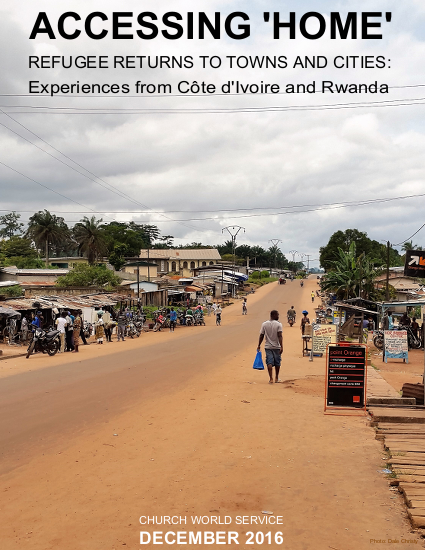
More than 60 percent of refugees worldwide are now estimated to live in urban areas, and increasingly humanitarian agencies are expanding their focus to become engaged with refugees and displaced persons living in cities and towns. Policy and operational shifts are underway, with emphasis on expanding access to protection, self-reliance and essential services among refugees who live in urban and non-camp locations.
Increased urbanization of forced displacement raises new opportunities and challenges in facilitating access to durable solutions, including the capacity and willingness of refugees to return to their countries of origin, and the prospect of increased returns to towns and cities rather than rural locations. With support from the U.S. Department of State’s Bureau for Population, Refugees and Migration (PRM), CWS undertook this research project with the goal of identifying factors that are related with relative success of refugee return to urban areas. Specifically, CWS sought to explore relationships between two variables – (a) place of origin in home countries and (b) place of settlement in countries of asylum – with refugees’ capacity for successful return and reintegration into urban areas.
Resource collections
- UN Habitat - Urban Response Collection
- Urban Response - Urban Crisis Preparedness and Risk Reduction
- Urban Response Collection - Community Engagement and Social Cohesion
- Urban Response Collection - Economic Recovery
- Urban Response Collection - Environment and Climate Change
- Urban Response Collection - Housing, Land and Property
- Urban Response Collection - Urban Crisis Response, Recovery and Reconstruction
- Urban Response Collection - Urban Resilience