In today’s global context, addressing climate change is closely tied to tackling gender inequality. Ensuring women's leadership is essential for the success of global climate change efforts. Christian Aid’s approach to gender issues emphasises this intersection, as demonstrated in our Climate Justice Strategy and Resilience Framework. These guide our climate adaptation and resilience efforts and acknowledge the need to address power relations and social norms alongside emerging climate risks.
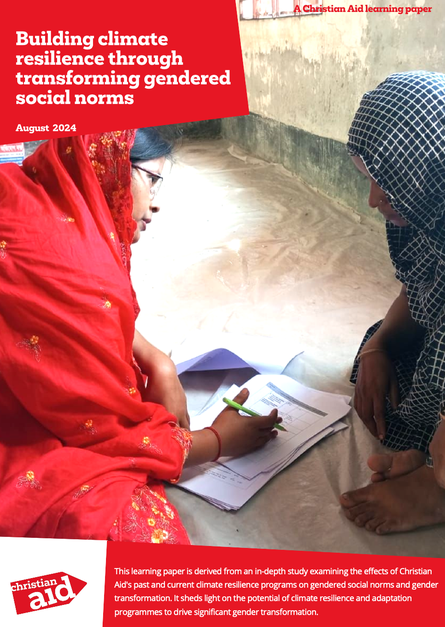
This learning paper is derived from an in-depth study examining the effects of Christian Aid's past and current climate resilience programmes on gendered social norms and gender transformation.
Through the actionable recommendations outlined in this paper, we offer a path forward for climate resilience initiatives to drive social and economic transformation for women facing intersecting vulnerabilities. This paper is particularly relevant to programme staff working and advising on climate adaptation, resilience, and gender justice. It aims to enhance programming that will achieve a crucial power shift, ultimately enabling women, girls, and broader communities to become more resilient.