Integrated Drought Management Programme in the Horn of Africa
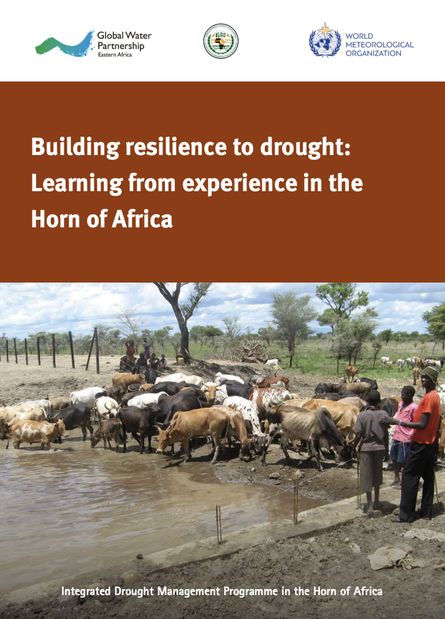
This publication was compiled by the Integrated Drought Management Programme in the Horn of Africa (IDMP HOA). The aim is to share lessons learned from innovative drought and water security demonstration projects conducted by communities and partners in Ethiopia, Kenya and Uganda. The case studies also contribute to the global IDMP programme, a joint undertaking between the Global Water Partnership (GWP) and the World Meteorological Organization (WMO).
Key lessons learned
- Initiatives driven by communities themselves create a sense of ownership and are more effective and sustainable. This often means changing mindsets and putting in place external support to ‘kickstart’ activities. At the same time, communities need to be armed with the knowledge they need to implement new ideas.
- While ‘bottom up’ action is more sustainable, there is also a need for high-level political support to create an enabling environment for broad stakeholder participation (that includes women and the private sector).
- Taking a landscape approach ensures all aspects of a problem are considered but requires effective implementation of appropriate regulatory frameworks governing natural resource use.
- An integrated and participatory approach to water management will drive equitable and sustainable benefits and requires strong community governance structures.
- Organizing farmers and other stakeholders into groups creates an entry point for information, training and action and gives people encouragement to adopt new ideas. Teamwork yields better results than working individually.
- Active participation and coordination among different stakeholder groups promotes learning and strengthens decision-making, helping to integrate development programmes into local government structures and ensuring appropriate support is provided to communities. This also requires strong community institutions to ensure accountability.
- Linking project interventions to specific livelihoods, activities, needs and interests enhances understanding of the importance of natural resources and the benefits of sustainable development. Simple, cost-effective and practical solutions to local challenges encourage rapid adoption.
- Sustainability strategies need to be introduced at the identification stage of all project appraisals. For infrastructure projects, this includes agreeing a management strategy and funding for ongoing maintenance. Any undertaking by the community must be reinforced by local government offices.
- Demonstration sites and appointing ‘champions’ or recruiting opinion leaders encourages adoption of new technologies. Schools can be highly effective in hosting demonstrations, raising awareness and promoting adoption.