The Electronic Cash Transfer Learning Action Network (ELAN) launched this research to build an evidence base around connecting emergency electronic transfer (e-transfer) recipients with additional financial services. They also wanted to learn if, when, and how e-transfers can promote sustained uptake and use of digital financial services (DFS).
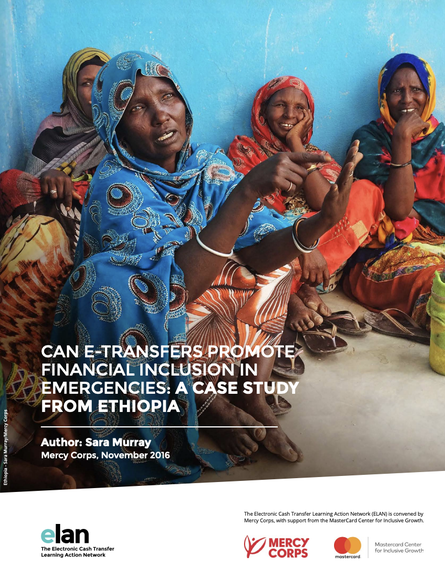
This case study explores an emergency assistance project implemented by Mercy Corps in Ethiopia’s Somali and Afar Regions from April through September, 2016. The project sat within the larger, five-year Pastoralist Areas Resilience Improvement through Market Expansion (PRIME) program and was designed to meet immediate household needs without undermining market systems and long-term development gains. Five thousand pastoralists and transitioning out of pastoralism (TOPs) households received three cash transfers of 45 USD each; of those, 2,067 participants received mobile transfers through new HelloCash mobile money accounts.
Unlike this series’ two previous case studies, e-transfers were chosen with a specific financial inclusion objective. Mobile phone purchase was subsidized through the program and considerable time was spent by Mercy Corps and its implementing partner, the Somali Microfinance Institution (SMFI), to introduce mobile money – a new product – to the target area.