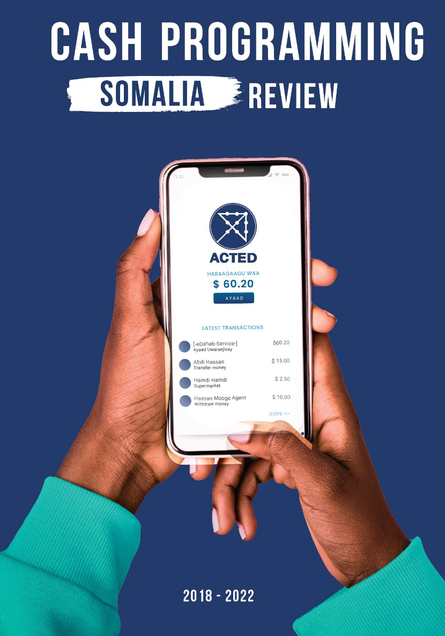
From 2018 to 2022, over half of ACTED’s projects in Somalia included unconditional and/or conditional cash activities making up an integral part of ACTED’s programming. To review the effectiveness and design of its past and current cash programming, ACTED used monitoring and evaluation data of 10 of those projects and conducted an integrative data analysis. The analysis covered overall 28,960 data entries collected through baseline, post distribution monitoring, and endline assessments.
In line with key literature on cash programs, ACTED could demonstrate that giving cash can increase access to food and non-food items, improve household’s food consumption quantity and diversity; reduce the use of negative coping strategies; reduce hunger experiences; and be used to repay food and non-food related debt. No effects of the cash projects on household’s savings and expenditure patterns could be observed.
Beyond being able to show that cash programs are effective overall, ACTED was able to identify factors in project design and beneficiary characteristics that impact the degree of effectiveness of cash. The review’s findings show that the biggest improvements in food security can be observed among those recipients who were highly food insecure before the cash project implementation. By giving cash, differences in the degree of food insecurity between beneficiaries are eliminated.
Additionally, the evidence shows that the transfer amount and duration influence the effect of cash on access to non-food items and the household’s ability to repay debt.
Particularly among beneficiaries being highly vulnerable before receiving cash, only a transfer amount of over 60% of the full minimum expenditure basket (MEB) and a transfer duration of 6 monthly transfers or more could reliably improve those two outcomes.
Based on these findings, ACTED recommends to:
- Continue to transfer cash to improve access to (more diverse) food in food- insecure areas.
- Continue to target the most vulnerable households with cash transfers to see larger improvements in food security outcomes.
- If aiming to reliably improve beneficiaries’ access to non-food items and to enable them to repay their debt, give cash covering above 60% of the full MEB for a period of 6 months and more.