Case Study
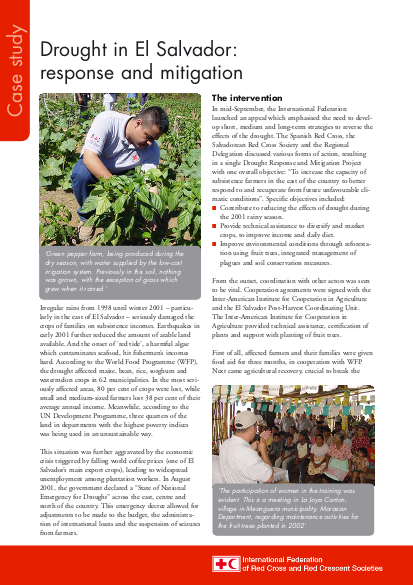
Irregular rains from 1998 until winter 2001 – particularly in the east of El Salvador – seriously damaged the crops of families on subsistence incomes. Earthquakes in early 2001 further reduced the amount of arable land available. And the onset of ‘red tide’, a harmful algae which contaminates seafood, hit fishermen’s incomes hard.
In mid-September, the International Federation launched an appeal which emphasised the need to develop short, medium and long-term strategies to reverse the effects of the drought. The Spanish Red Cross, the Salvadorean Red Cross Society and the Regional Delegation discussed various forms of action, resulting in a single Drought Response and Mitigation Project with one overall objective: “To increase the capacity of subsistence farmers in the east of the country to better respond to and recuperate from future unfavourable climatic conditions”.