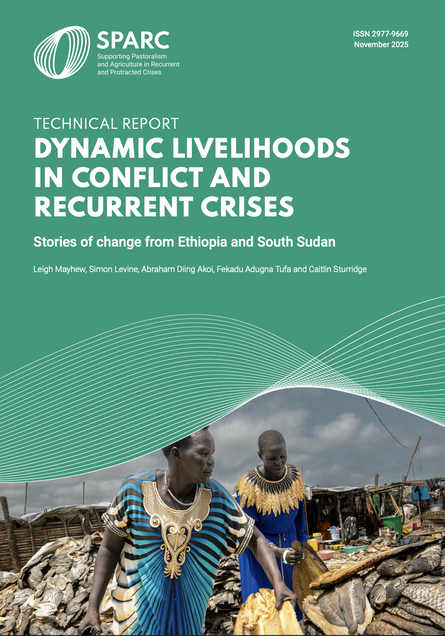
This report looks at change within peoples livelihoods, the conditions that allow change to occur and spread, and the barriers which prevent change from spreading to other people and places. From observation it is generally known that livelihoods in conflicts and recurrent crises are dynamic. Yet analysis of change and innovation is usually missing from assessments that underpin support for livelihoods in such situations. It seems plausible that more effective support could be offered if it was based on a better understanding of the ways in which people are already seeking to adapt their livelihoods and to innovate.
SPARC looked to contribute to filling the evidence gap on livelihood adaptation in response to crisis and conflict by documenting examples of positive change. The study looked to identify the dynamics and factors that facilitate change, and the conditions that most favour local adaptation and its spread. The study also sought to identify the constraints to people’s own livelihood changes and whom they most affect.
SPARC collected stories from three locations: Mekelle, Ethiopia; and Bor and Nzara counties in South Sudan. Positive stories were identified through group discussions and through snowball sampling (where each informant led to another). During detailed interviews with men and women, individuals were then invited to offer their stories in their own terms, illustrating how they had innovated or adapted ways to make a living and where their ideas came from. The informants were identified with the purpose of documenting successful stories. The informants are not a random sample, because the research did not aim to draw general conclusions about how many people are innovating in these ways.