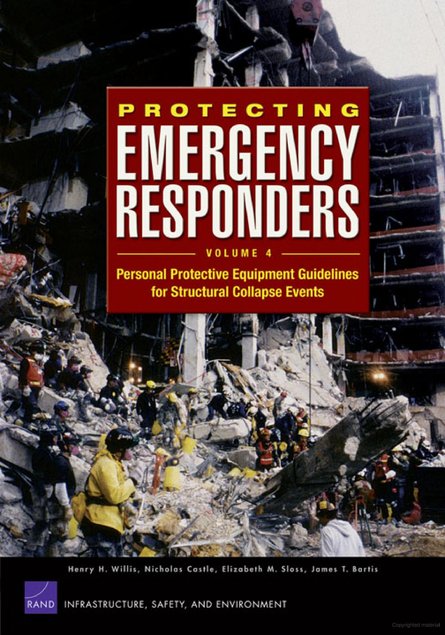
Emergency workers who are likely to respond to a large structural collapse will encounter numerous physical, chemical, and biological hazards. This monograph provides guidelines for the use of personal protective equipment by emergency workers required to work in this environment. The emphasis of the monograph is on the first several days following a structural collapse, because it is during these initial days that the hazards are greatest, the response is most intense, site-specific exposure monitoring may not be available, and logistical challenges are greatest. These guidelines consider the full range of emergency workers who are likely to respond to a large structural collapse, including local fire, medical, and hazardous material teams as well as police officers and urban search and rescue teams.
The primary purpose of these publications is to serve as a technical source for incident commander guidelines that have been developed by NIOSH for broad distribution to the disaster management and emergency responder communities. In addition, these documents should be of interest to organizations responsible for developing equipment, standards, guidelines, and regulations for the protection of emergency responders.
The development of these guidelines was sponsored by the National Personal Protective Technology Laboratory of the National Institute for Occupational Safety and Health. A separate report, Review of Literature Related to Exposures and Health Effects at Structural Collapse Events (Sloss et al., 2005), reviews the possible health effects to emergency workers from exposure to conditions following a tall-building collapse.
Resource collections
- Climate emergency
- Earthquakes
- Evaluating humanitarian action
- Learning from crises (Natural hazards)
- UN Habitat - Urban Response Collection
- Urban Response - Urban Crisis Preparedness and Risk Reduction
- Urban Response Collection - Community Engagement and Social Cohesion
- Urban Response Collection - Economic Recovery
- Urban Response Collection - Environment and Climate Change
- Urban Response Collection - Housing, Land and Property
- Urban Response Collection - Urban Crisis Response, Recovery and Reconstruction
- Urban Response Collection - Urban Resilience