March 2023 - February 2024
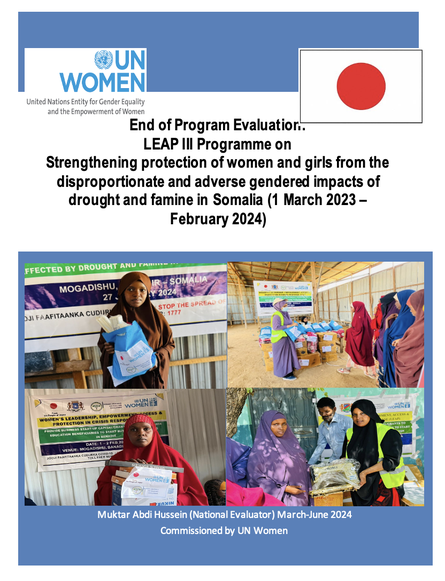
The 2022-2023 drought in Somalia has affected 7.8 million people and led to the displacement of over 1 million individuals. Women and girls are particularly vulnerable, facing multiple challenges such as sexual violence, loss of livelihoods, food insecurity, and limited access to resources. The humanitarian response plan for food security was underfunded, creating a funding shortfall exacerbated by international focus on the crisis in Ukraine.
To tackle the complex multiple interlinked and complex crises mentioned above, UN Women implemented the LEAP III project (women’s leadership, empowerment, access, and protection) in Somalia. The LEAP III project, aligned with the Government of Japan's commitment to gender equality, aims to empower women and girls affected by the drought through protection and alternative livelihood opportunities. It sought to enhance leadership skills, promote gender-responsive resilience, and directly reach 9,200 beneficiaries. Cultural norms and practices like female genital mutilation pose challenges, requiring engagement with local leaders and organizations. Economic empowerment approaches, such as Village Savings and Loan Associations, have proven effective in building resilience. UN Women partnered with NAPAD, a local CSO, and engaged relevant ministries during project implementation.
This independent end line evaluation was conducted to comprehensively assess the achievements of the project in relation to the set objectives. The evaluation aimed to identify and document valuable lessons learned, including design issues, best practices, and lessons that could be scaled up or replicated in future projects. Furthermore, it sought to evaluate the Project's contribution to women's economic empowerment, protection, and support for alternative livelihood opportunities to facilitate recovery from the impacts of the drought and famine among crisis-affected women in Mogadishu, Baidoa, Kismayo, and Garowe.