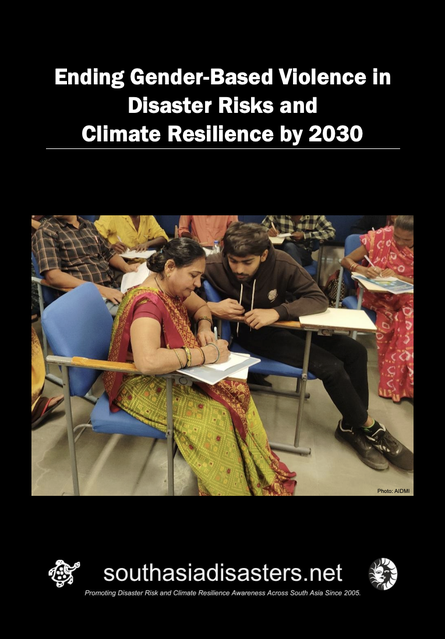
Gender-based violence (GBV) remains one of the most serious yet least addressed risks in disaster and climate contexts. This issue of Southasiadisasters.net examines how disasters, displacement, extreme heat, migration, water scarcity, recovery processes, and climate adaptation can intensify violence against women and girls when protection systems are weak or absent. The issue argues that GBV in and around disasters is not incidental; rather, it is predictable, preventable, and central to disaster risk reduction and climate resilience by 2030.
Drawing on field experience, action research, and policy reflections from across India and South Asia, the issue highlights practical areas for action: safer Panchayat planning, protection-centred school safety, gender-responsive early warning, secure shelters, safer workplaces, women-led governance, and protection-sensitive climate finance and nature-based solutions. Together, these articles call for embedding dignity, safety, and justice into every stage of disaster governance.
This issue draws from the work of National Disaster Management Authority (NDMA) in India; Duryog Nivaran in South Asia, ADRRN at Asia Pacific; and UN Women and UNDRR at the global level, with a focus on AIDMI’s work with disaster-affected women across the past 12 disasters.