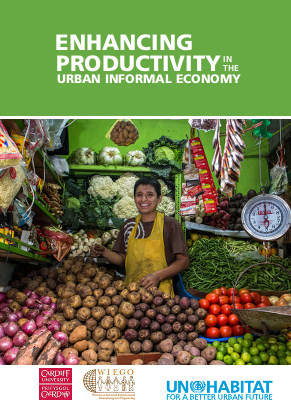
The informal economy is the lifeblood of many cities today. It provides jobs for many, in some cities the majority of urban workers, provides flexible services to many urban residents, and makes significant contributions to urban economies. The informal economy demonstrates vibrancy, flexibility and entrepreneurship, and supports local supply chains and global exchange. However, diversity makes the informal economy hard to capture in conventional urban policy processes.
This report argues for a radical and new policy paradigm, to promote inclusion of informal workers in urban dialogues, and mainstream the informal economy in urban policies and strategies. Over the last 20 years knowledge has grown – of the potential of informal employment to provide households with pathways out of poverty, communities with accessible and affordable goods and services, and cities with vibrant sites of economic and social exchange – and of the ways in which cities can help make informal employment more secure.
Links
Resource collections
- UN Habitat - Urban Response Collection
- Urban Response - Urban Crisis Preparedness and Risk Reduction
- Urban Response Collection - Community Engagement and Social Cohesion
- Urban Response Collection - Economic Recovery
- Urban Response Collection - Environment and Climate Change
- Urban Response Collection - Housing, Land and Property
- Urban Response Collection - Urban Crisis Response, Recovery and Reconstruction
- Urban Response Collection - Urban Resilience