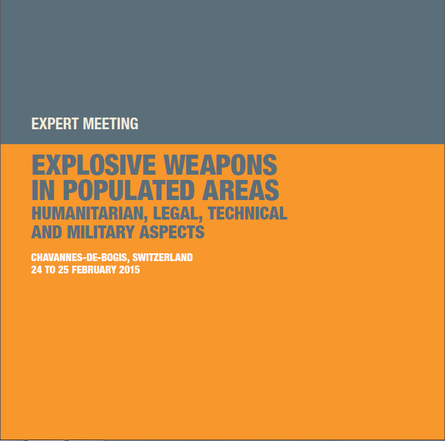
Increasingly, explosive weapons designed for warfare on open battlefields are being used in towns and cities. The effects on civilians are often devastating, even when these weapons are aimed at legitimate military targets.
The direct effects of explosive weapons on civilians in densely populated areas are obvious: deaths, injuries and damage. The indirect effects are less obvious. Damage to water, electricity or sewerage systems affect services such as health and water distribution, leading to the spread of disease and further deaths. In the face of such devastation, surviving civilians often have no choice but to leave, and their displacement is often long-lasting.
In February 2015, the ICRC convened a meeting of experts on the topic of explosive weapons in populated areas, and the ICRC's report of that meeting appears below.
Resource collections
- Evaluating humanitarian action
- UN Habitat - Urban Response Collection
- Urban Response - Urban Crisis Preparedness and Risk Reduction
- Urban Response Collection - Community Engagement and Social Cohesion
- Urban Response Collection - Economic Recovery
- Urban Response Collection - Environment and Climate Change
- Urban Response Collection - Housing, Land and Property
- Urban Response Collection - Urban Crisis Response, Recovery and Reconstruction
- Urban Response Collection - Urban Resilience