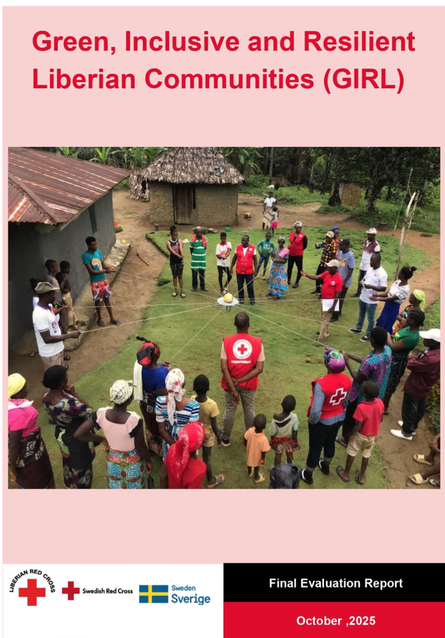
The Green, Inclusive, and Resilient Liberian Communities (GIRL) Project, implemented by the Liberian National Red Cross Society (LNRCS) in partnership with the Swedish Red Cross and funded by the Swedish Embassy, aimed to strengthen resilience in 45 communities across Grand Kru, Sinoe, and River Gee Counties between 2023 and 2025. The project focused on improving access to safe water and sanitation, promoting healthy hygiene behaviors, and enhancing climate-smart agriculture and disaster preparedness through inclusive, community-driven approaches.
The evaluation found the project highly relevant to community needs, addressing unsafe water, poor sanitation, and weak disaster preparedness identified through participatory assessments. It adapted well to changing contexts, including climate variability and farming schedules, and was aligned with national frameworks such as the ARREST Agenda and the National Disaster Risk Management Policy. However, the absence of formal agreements with County Health Teams limited technical oversight and sustainability. Effectiveness was strongest in health and hygiene outcomes. Communities widely adopted handwashing, latrine use, and environmental cleanliness, reducing malaria and diarrheal cases. Women’s leadership flourished through Mothers’ Clubs and WASH Committees, fostering social cohesion and gender inclusion. Disaster preparedness and climate adaptation outcomes were more modest, constrained by limited technical follow-up and rapid scale-up from 12 to 45 communities, which diluted supervision quality. Sustainability prospects are promising for hygiene practices institutionalized through local by-laws and community-led maintenance funds, but technical sustainability of assets such as hand pumps and Community Information Centers remains uncertain due to lack of maintenance plans and water-quality testing.
The evaluation recommends extending project duration to consolidate gains in newer communities, formalizing partnerships with health authorities, planning scale-ups based on realistic resources, strengthening technical capacity and monitoring, deepening disability inclusion through livelihood support, and embedding proven community-led models—such as women-led resilience groups and hygiene campaigns—into local development plans to ensure long-term impact.