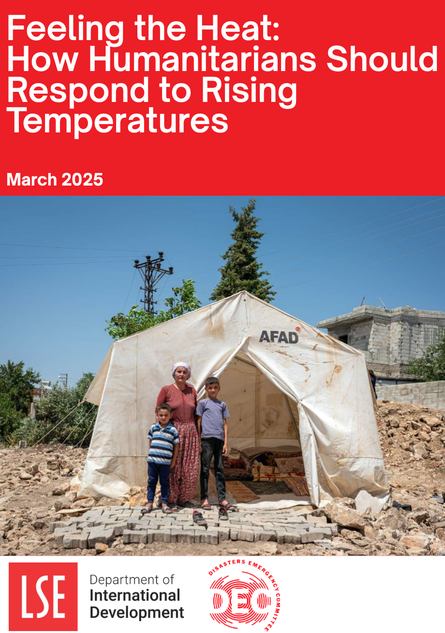
Extreme heat is an urgent global challenge, affecting billions worldwide. It poses severe risks to human health, livelihoods and society as a whole. Human-driven climate change is increasing the intensity and frequency of heatwaves, increasing the risks for the most vulnerable, while measures to protect them remain insufficient, disjointed and underfunded. For humanitarians, extreme heat is a critical concern. Heatwaves can be a crisis in and of themselves and they exacerbate existing crises by disrupting supply chains, increasing pressures on local healthcare systems and threatening water security. It’s about time humanitarians started taking extreme heat more seriously.
This report examines the role of extreme heat in driving new and exacerbating existing humanitarian need. It outlines the extent of current engagement with extreme heat by members of the Disasters Emergency Committee (DEC), particularly within the health and shelter clusters, and analyses current measures to tackle extreme heat across the membership and beyond. The report draws on case studies from Pakistan and Bangladesh, given their vulnerability to extreme heat and the recent involvement of DEC members in these regions.