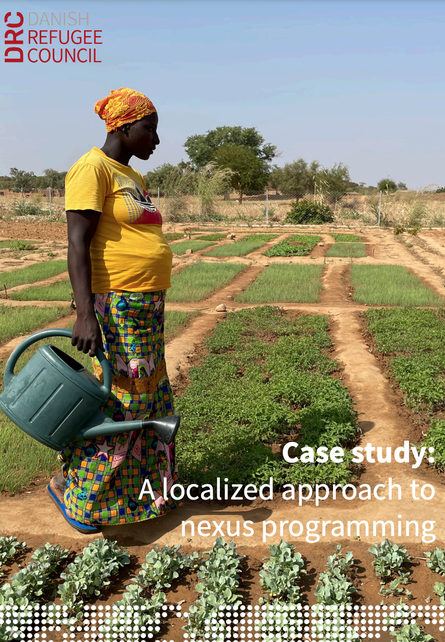
The Liptako-Gourma region is affected by a new and complex crisis, brought on by insecurity linked as much to the weakness of the state presence as to the multiplication of armed groups with diverse motivations and modes of action, as well as community clashes and the rise of violent extremism that are forcing thousands of people to move. The region has become the epicenter of the Sahelian crisis, at the crossroads of the three borders of Mali, Burkina Faso and Niger. Widely impacted, the displaced populations as well as the host populations suffer from insecurity which forces them to adapt but the multiple needs are constantly growing.
Due to the complexity of the causes that reinforce the multiple vulnerabilities of the populations, a multisectoral response is required in the Liptako-Gourma region. Accordingly, DRC has been implementing regional programming which both programmatically and operationally are promising examples of Humanitarian-Development-Peace (HDP) “triple” nexus programming through a localization lens. This paper outlines key lessons learned in implementing the triple nexus.