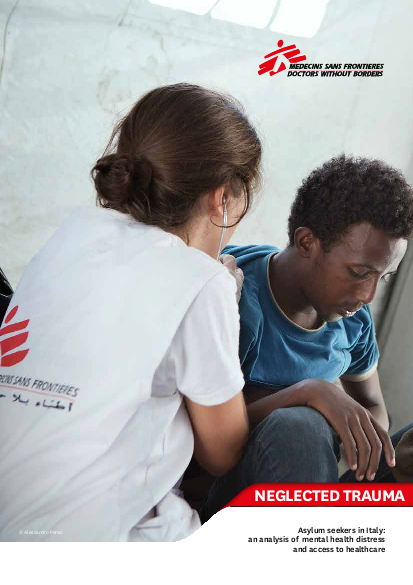
The report, titled Neglected Trauma, uses data collected between July 2015 and February 2016 in several emergency reception centres (CAS) in Rome, Trapani and Milan, as well as medical data collected during MSF’s regular activities in the centres of Ragusa Province, between 2014 and 2015. Among the 199 patients directly cared for by MSF’s teams in Ragusa emergency reception centres, 42 per cent presented with mental disorders associated with Post Traumatic Stress Disorder (PTSD), and 27 per cent of patients were affected by anxiety. The likelihood of psychological disorders was shown to be 3.7 times higher among those who suffered previous traumatic events.
According to the report, the living conditions in the emergency reception centres, set up in 2014 as an adhoc measure to accommodate the influx of arrivals, not with long term accommodation in mind, are among the main aggravating factors of mental health disorders amongst migrants and asylum seekers. Still, nearly two years into the so-called migration crisis in Italy, new arrivals often have no option but to stay for months on end in what was only ever planned as a temporary accommodation. This situation is further compounded by the fact that local healthcare services lack the resources required to provide appropriate care to asylum seekers and migrants and employ staff who are often not appropriately trained to identify their needs.