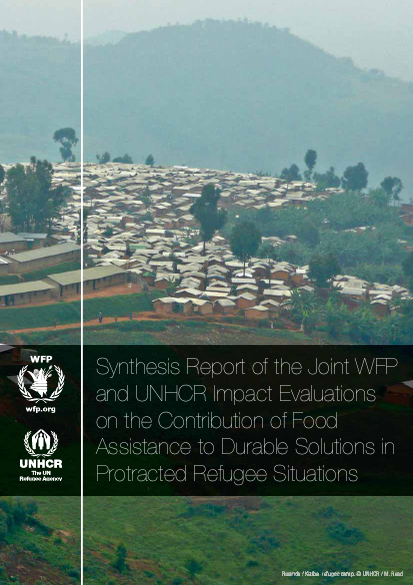
This is a synthesis of the main fi ndings and common lessons emerging from a series of mixed-method impact evaluations assessing the contribution of food assistance to durable solutions in protracted refugee situations. The evaluations, conducted jointly with the Office of the United Nations High Commissioner for Refugees (UNHCR) through 2011–2012 in Bangladesh, Chad, Ethiopia and Rwanda, tested the validity of an intervention logic derived from UNHCR and WFP policies and programme guidance, which posited that the two agencies’ combined work would contribute to increased self-reliance over three stages following refugee arrival.