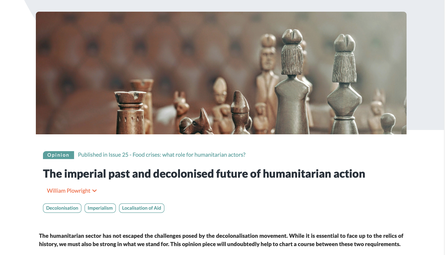
All social institutions are products of the times in which they were created. Humanitarianism emerged and grew during the nineteenth and twentieth centuries, in periods of imperialism and colonialism, and many aspects of that era persist in the structures of international humanitarian action today. In order to face the challenges of the present, an honest and thorough reflection on these legacies is necessary.
This article will frame contemporary humanitarian action by understanding its imperial past and attempts to decolonise assistance in the present. It will identify the elements of the colonial and/or imperial systems that persist in the present international system of crisis response. Discussion will then proceed to summarise the contemporary debate around decolonisation of the humanitarian sector, looking both at calls for change and critiques of them.[1]