Leave no one behind: Identifying and addressing the barriers faced by persons with disabilities in the humanitarian response
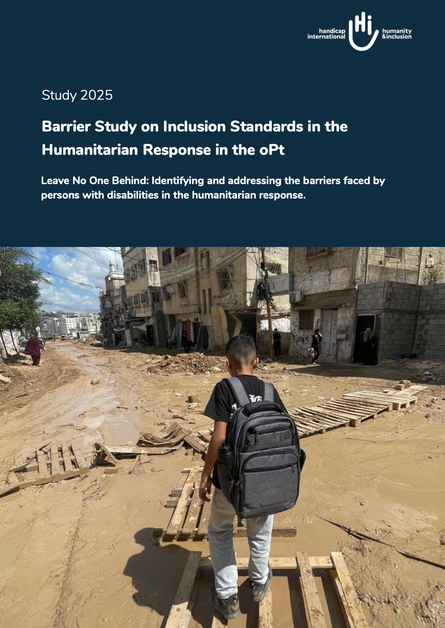
The humanitarian situation in the occupied Palestinian territory (oPt) has escalated into an unprecedented crisis following the events of October 2023. Nearly 90% of Gaza’s population (approximately 1.9 million people) are internally displaced due to ongoing hostilities. It is estimated that at least 25% of people injured in the Gaza Strip have disabilities that require long-term, specialized rehabilitation services, driving the estimated number of persons with disabilities to over 80,000. Meanwhile, the West Bank continues to face systemic movement restrictions, settler violence, and rising instability, with marginalized populations, particularly persons with disabilities, bearing the brunt of exclusion and vulnerability. This period has also been marked by increasing restrictions on humanitarian access as well as the militarisation and weaponisation of aid, at a time when civilian suffering and needs are critical.
This study, commissioned by Humanity & Inclusion (HI) and implemented by RoadWise Consulting, examines the extent to which persons with disabilities are included in humanitarian service delivery across three key sectors: education, protection, and health. It also explores specific barriers faced in other sectors such as WASH, shelter, food security, and social protection that impact access to inclusive service.
The study aimed to:
- Assess the main barriers to inclusive access for women, men, girls and boys with disabilities.
- Identify enabling factors and existing good practices on disability-inclusive humanitarian action.
- Provide recommendations to stakeholders, governmental authorities, donors, humanitarian clusters, service providers, and communities on inclusive standards and localized responses for persons with disabilities.