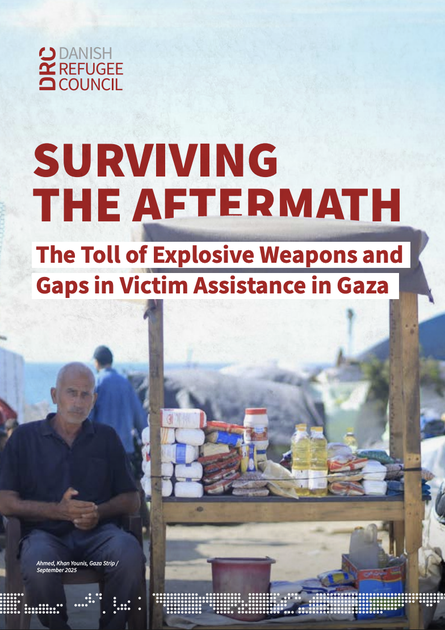
Civilian harm from explosive weapons in Gaza is predictable, cumulative, and long-lasting, yet the systems intended to support victims have largely failed to respond.
Drawing on 100 individual assessments conducted by the Danish Refugee Council, this report examines the gap between international commitments on Victim Assistance and the lived realities of civilians injured by Explosive Ordnance, the use of explosive weapons in populated areas, and small arms and light weapons. The findings demonstrate that while harm is foreseeable and obligations are clearly defined under international frameworks, assistance in Gaza remains fragmented, delayed, and insufficient in practice.