A comparative case study examination of experiences in Afghanistan, Ukraine, Democratic Republic of the Congo, Bangladesh and Venezuela
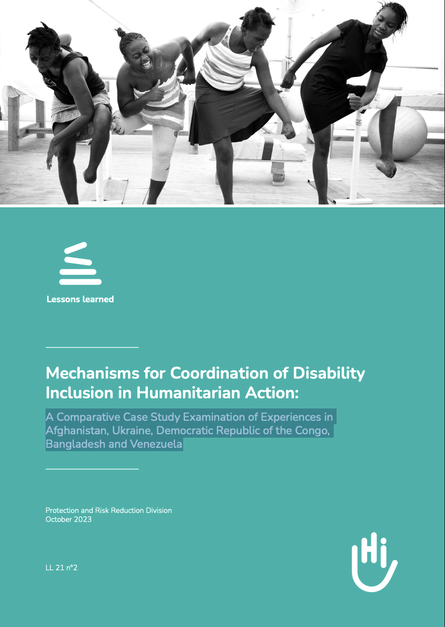
The report explores how disability inclusion coordination mechanisms contribute to more inclusive humanitarian action by examining five country case studies selected from a broader global mapping exercise. It analyzes governance arrangements, leadership models, links with the Humanitarian Programme Cycle (HPC), engagement of Organizations of Persons with Disabilities (OPDs), funding, localization, advocacy, information management and technical support. The comparative analysis identifies common success factors—including dedicated coordination capacity, formal links with humanitarian coordination structures, sustained funding and meaningful OPD participation—as well as persistent barriers such as limited institutional recognition, fragmented funding and inconsistent integration into humanitarian systems. The report concludes with lessons learned and recommendations for strengthening disability inclusion within humanitarian coordination and programming globally.