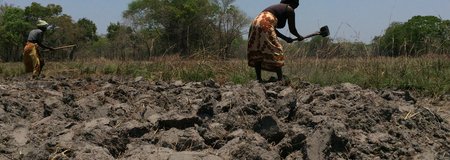
This lessons paper distills 17 top-level lessons from humanitarian responses to droughts between 2012 and 2024. The lessons highlight areas of strong convergence on what humanitarian actors should prioritise when anticipating, responding to and supporting recovery from drought.
About ALNAP Learning from Crises papers
ALNAP Learning from Crises papers gather and present learnings from past humanitarian responses and present them in easily digestible and useful lessons for humanitarian actors to consider when designing and preparing for future responses.
Their purpose is not to provide a definitive answer to the question ‘what works?’ but to highlight critical issues that agencies must consider when designing and implementing responses.
Our Learning from Crises are aimed at a broad audience of humanitarian actors: from explicitly humanitarian organisations to civil society organisations, governments (national, regional and local) and donors. We trust readers to decide which lessons are most relevant to them and how best to operationalise them in their specific context and role.
The intention behind these papers – and ALNAP’s broader goal – is to support humanitarians everywhere to improve humanitarian action by exchanging evidence, experience and practical ideas.
-
Acknowledgements
The authors would like to thank the many people who generously contributed their time and insights to this study.
-
Acronyms
A list of abbreviations and acronyms that appear frequently throughout the report.
-
Introduction
The lessons in this paper aims to aid in closing the gap between policy and practice, drawing on the hard work and commitment of humanitarian and community responses to drought.
-
Chapter 1
Summary of lessons
This section provides an overview of the 17 top-level lessons we identified by reviewing evaluations, research and the documented experience of humanitarian responses to droughts between 2012 and 2024, complemented by expert input through a Delphi process.
-
Methodology
This Learning from Crises Paper follows ALNAP’s Lessons Papers: A methods note and combines a systematic evidence review with a structured Delphi panel process to identify and validate lessons from humanitarian responses to drought.
-
Chapter 2
Lesson 1: Strengthen coordination, leadership and governance
Effective drought response and resilience-building require inclusive and coordinated systems that align as many humanitarian, development, government, community and regional actors as possible under shared goals, clear roles and sustained donor support.
-
Chapter 3
Lesson 2: Build effective partnerships
Partnerships that combine community insight with private sector capacity, civil society and government leadership enable faster humanitarian responses that leave behind stronger, more connected systems capable of withstanding future droughts – especially when built before a crisis.
-
Chapter 4
Lesson 3: Ensure predictable and flexible funding
Effective programming depends on predictable, flexible and harmonised financing. Embrace innovative risk-transfer tools to move beyond short-term, reactive aid to include ‘no regrets’ early action and resilience-building.
-
Chapter 5
Lesson 4: Use early warning of drought and make timely drought declarations
Humanitarian and development actors must anticipate risks rather than react to crises. Governments need to make evidence-based and timely drought declarations and not wait until the full impact of a drought has materialised.
-
Chapter 6
Lesson 5: Move towards anticipatory action
Humanitarian and development systems must transition from reactive crisis response to proactive, anticipatory risk management to reduce the human and economic toll of drought and make the most cost-efficient use of donor funds.
-
Chapter 7
Lesson 6: Put people and communities affected by drought at the centre of responses
Drought responses are more effective when communities including women-, youth- and farmers-led groups lead analysis, planning, implementation and monitoring.
-
Chapter 8
Lesson 7: Address social and structural barriers to inclusion
Drought responses must be inclusive of all affected people so that everyone can participate and benefit, especially those most at risk.
-
Chapter 9
Lesson 8: Integrate protection across drought response
Protection risks increase during drought, particularly through family separation, mobility, reduced access to essential services and harmful coping strategies. Responses must integrate protection analysis across sectors and strengthen community-based, inclusive systems that reduce risks and prevent harm.
-
Chapter 10
Lesson 9: Apply conflict-sensitive and peace-positive approaches
Drought responses must be conflict-sensitive and support peace-building efforts where possible.
-
Chapter 11
Lesson 10: Deliver multisectoral drought responses
Actors should design context-specific, multisectoral drought responses that address both immediate needs and the structural causes of vulnerability.
-
Chapter 12
Lesson 11: Address health needs during drought
Different and specific health needs should be addressed, and existing health infrastructure supported where possible given the extra demands on health services during drought.
-
Chapter 13
Lesson 12: Strengthen social protection for drought response
Large-scale social protection programmes demonstrate the potential to support millions during drought. They may have systemic weaknesses, but they can be strengthened to become more dynamic and responsive.
-
Chapter 14
Lesson 13: Select appropriate programme modalities
Cash programming is effective – and communities often prefer it – but it needs to be adaptive to local contexts.
-
Chapter 15
Lesson 14: Link humanitarian response to resilience
Humanitarian and development actors should move beyond short-term relief by integrating immediate drought response with long-term resilience-building. Linking livelihood protection with sustainable systems and coordinated, cross-sectoral collaboration enables communities to recover, adapt and thrive.
-
Chapter 16
Lesson 15: Protect and strengthen livelihoods and assets
Prioritise protecting, diversifying and strengthening livelihoods. This should include rural and urban, and male- and female-headed households by employing adaptive, gender-sensitive and climate-informed approaches.
-
Chapter 17
Lesson 16: Build water, sanitation and hygiene (WASH) and ecosystem resilience
Humanitarian actors should move from short-term water trucking and emergency WASH responses towards integrated, sustainable water and ecosystem management as soon as possible.
-
Chapter 18
Lesson 17: Strengthen monitoring, evaluation, accountability and learning (MEAL) and data systems
Embed MEAL systems that are inclusive and locally led, and implement data management systems that generate timely, disaggregated, actionable insights.
-
Bibliography
List of references used in this report
-
Annex 1
Detailed methodology
A detailed explanation on the research approach used.