VOICE Out Loud 39
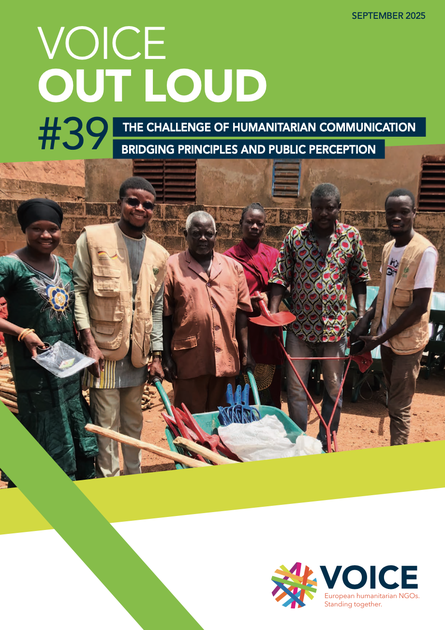
This edition brings together powerful contributions from across our network, all centred on a critical reflection: How can we ensure that humanitarian narratives promote dignity, agency, and justice? From the ethics of visual storytelling to deeper questions around representation, ownership, and decolonisation, our contributors challenge us to rethink assumptions and practices. In doing so, they highlight how shifting narratives is inseparable from shifting power — including who sets priorities, who receives funding, and whose voices are heard at the decision-making table.
- ADRA sheds light on the ethics of visual storytelling in humanitarian fundraising, urging organisations to move beyond performative images and ensure consent, context, and dignity in how individuals and communities are portrayed.
- HIAS Europe emphasizes the need to rethink humanitarian narratives through a “story-owning” approach, advocating for more equitable representation and challenging the structural imbalances that shape whose voices are heard — and whose are not.
- Geneva Call shows how misinformation and disinformation can endanger humanitarian access and civilian safety in conflict zones.
- We also share key highlights from the VOICE event on decolonisation which explored how colonial legacies continue to shape humanitarian systems today.
- In the “A Closer look section” Médicos del Mundo draws attention to the protracted crisis facing the Sahrawi people, where exile and marginalisation continue to undermine access to health and dignity.
- Finally, VOICE had the privilege to interview EU Commissioner Hadja Lahbib.