Working paper
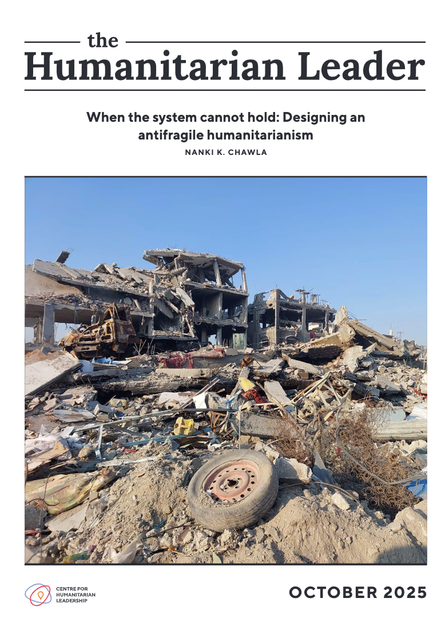
This article was originally published in The Humanitarian Leader.
The abrupt suspension of U.S. humanitarian aid in early 2025, in addition to the famines in Gaza and Sudan, exposed the fragility of the international aid system and triggered a sector-wide reckoning.
Written from the perspective of a humanitarian practitioner, this paper argues that current structures are brittle: designed for stability and repeatedly failing under volatility. Drawing on twelve years of operational experience, it explores how an ‘antifragile’ humanitarian model could not just withstand, but improve from disruption.
Four design principles are proposed:
- Start where we are—confront power and political realities;
- Embrace uncertainty—design for volatility, experimentation, and risk-taking;
- Do less but better—focus on core life-saving outcomes while discarding ineffective practice; and
- Respect agency—centre the perspectives and leadership of people affected by crisis, guarding against elite capture.
Together these principles point towards a shift from generosity-based, donor-driven aid to solidarity-based, self-sustaining systems of response—anchored in local actors, diversified financing, and multiple centres of power.