Realist-informed evaluation of the ‘Mighty Children’ programme in Afghanistan
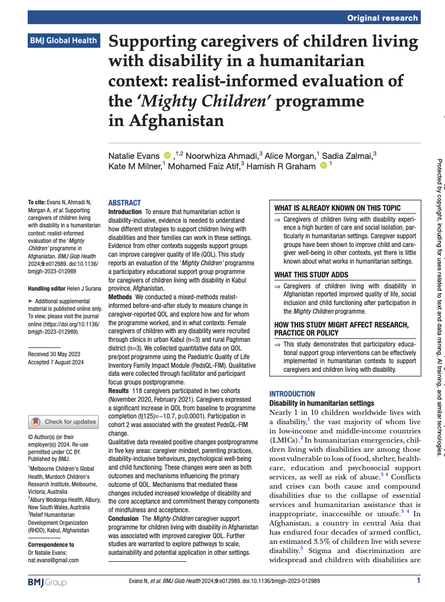
This realist-informed mixed-methods evaluation examines the Mighty Children programme, a participatory educational support group intervention for caregivers of children living with disabilities in Kabul Province, Afghanistan. Combining quantitative measures of caregiver quality of life with qualitative focus groups, the study explores how, for whom and under what conditions the programme generated change. It finds significant improvements in caregivers' quality of life, parenting practices, psychological well-being, disability-inclusive behaviours and children's functioning, identifying increased knowledge of disability, peer support, mindfulness, acceptance and values-based action as the key mechanisms driving these outcomes.
The article discusses the influence of context, including stigma, social isolation, gender roles and humanitarian service constraints, and concludes that caregiver support groups represent an effective and scalable approach to strengthening disability inclusion, family resilience and nurturing care in humanitarian settings.