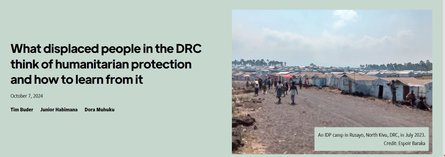
Humanitarian crises are increasingly protection crises, marked by record displacement, widespread gender-based violence, and violations against children. Despite IASC’s protection policy, an independent review found humanitarians have “failed populations at risk,” with leadership and coordination gaps compounded by limited consultation with affected people.
Research by Ground Truth Solutions, Victim’s Hope DRC, and IES Congo (2022–2024) engaged over 2,000 aid recipients in conflict‑affected provinces of eastern DRC. Communities reported that humanitarian aid plays a protective role, but simple consultations rarely improve perceptions of safety. Genuine participation in aid programmes, however, strengthens trust and fosters more positive protection outcomes.
The findings stress that protection must be people‑centred and participatory, moving beyond token consultation to meaningful engagement that reduces risks and enhances impact in crisis settings.