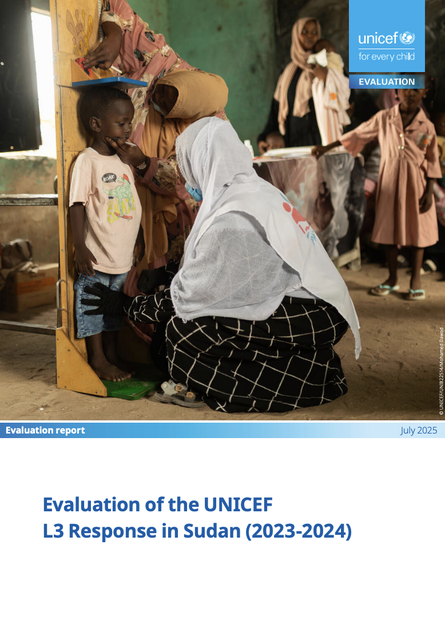
The evaluation of UNICEF's Level 3 (L3) response in Sudan, covering the period from June 2023 to December 2024, aimed to assess the effectiveness and relevance of UNICEF's humanitarian interventions amidst one of the most severe crises in recent history.
Conducted by Landell Mills International, the evaluation involved extensive fieldwork across various states, including River Nile, Red Sea, and Central Darfur, and utilized a mixed-methods approach, including key informant interviews and focus group discussions.
The findings revealed that while UNICEF's response was broadly relevant and aligned with the needs of affected populations, it faced significant challenges, particularly in hard-to-reach areas. Access constraints, operational delays, and insufficient community engagement hampered the effectiveness of interventions, leading to equity gaps for vulnerable groups such as children with disabilities and adolescents. Despite these challenges, UNICEF demonstrated strong leadership in cluster coordination and advocacy for children's rights, achieving notable successes in sectors like WASH and nutrition. However, the education response remained inadequate, and the overall impact was constrained by ongoing conflict and political instability.
The evaluation highlighted the need for improved conflict-sensitive programming and a more systematic approach to integrating cross-cutting issues such as gender and disability inclusion. The recommendations included:
- Strengthen corporate systems for early warning, emergency preparedness, and security risk management;
- Enhance the use of Emergency Procedures;
- Strengthen the commitment to Humanitarian Cash Transfers in humanitarian settings;
- Strengthen UNICEF's cluster leadership and coordination;
- Ensure that the necessary time is set aside for reflection and regional sharing of good practices;
- Make equity and inclusion a higher priority;
- Expand integrated programming;
- Increase the SCO's capacity for conflict-sensitivity;
- Continue to tackle the core problems of humanitarian access;
- Advance localisation through deeper partnerships with national and community-based organizations.