Summary
The Global Humanitarian Assistance Report 2026 shows an unprecedented contraction in humanitarian funding, resulting in millions of people in crisis without assistance and backsliding on promised reforms.
International humanitarian funding has contracted by almost a third since 2023, with a single-year drop of 20% in 2025 placing total assistance at its lowest level in a decade. The United States and Germany together account for nearly nine in ten dollars lost last year. Gulf donors, however, have increased their contributions. This more diverse donor landscape carries the risk of assistance being adversely affected by fragmentation and misaligned interests unless action is taken to increase coordination. Almost every major crisis has been dealt cuts in assistance, and the largest funding gap on record for UN-coordinated appeals means countless people in need went unassisted in 2025. Millions of people have been removed from humanitarian plans through prioritisation processes introduced to respond to the paucity of funding. Against this backdrop, humanitarian actors are still waiting for reforms promised 10 years ago under the Grand Bargain. Following very little change, progress achieved in key reform areas is now backsliding. Calls are growing to both reform the existing system and create a new vision for humanitarianism altogether. Igniting the political will remains the greatest challenge of all.
1. The changing donor landscape
One in three humanitarian dollars has disappeared in just two years.
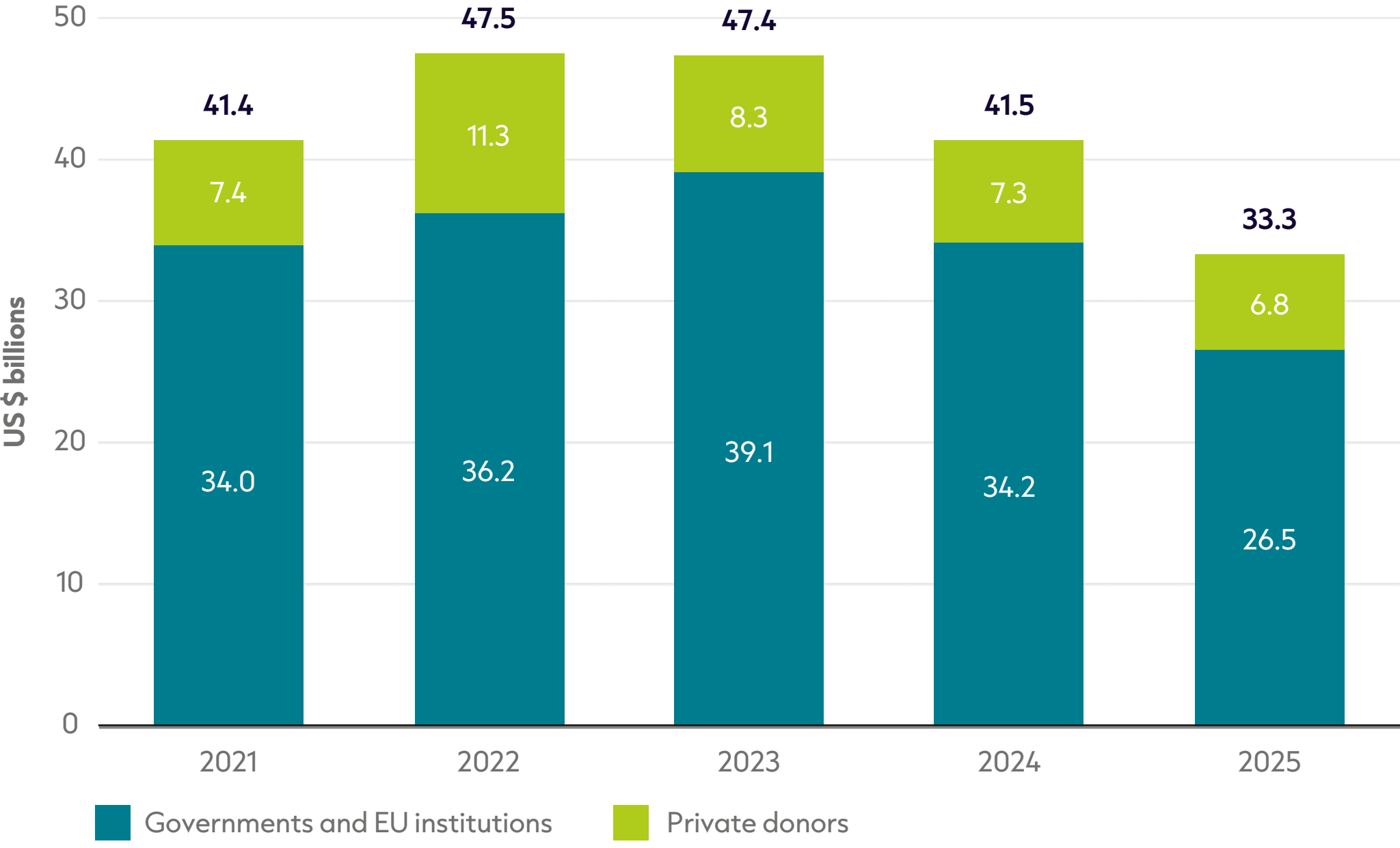
International humanitarian assistance contracted by 29.7% in the last two years, from US $47.4 billion in 2023 to US $33.3 billion in 2025. This is the steepest sustained decline on record. The sharpest drop came in 2025, when funding fell by 20%
(–US $8.1 billion) in a single year. Total international humanitarian assistance now stands at its lowest level in a decade.
Humanitarian funding fell for the third year in a row, with a 20% drop in 2025
Source: Based on Organisation for Economic Co-operation and Development (OECD) Development Assistance Committee (DAC), UN Office for the Coordination of Humanitarian Affairs (OCHA), Financial Tracking Service (FTS) data and UN Central Emergency Response Fund (CERF).
Notes: Figures for 2025 are preliminary. Totals for previous years differ from those reported in previous GHA reports due to updated deflators and data. Data is in constant 2024 prices. The methodology used to produce total international humanitarian assistance is detailed in the ‘Methodology and definitions’ chapter.
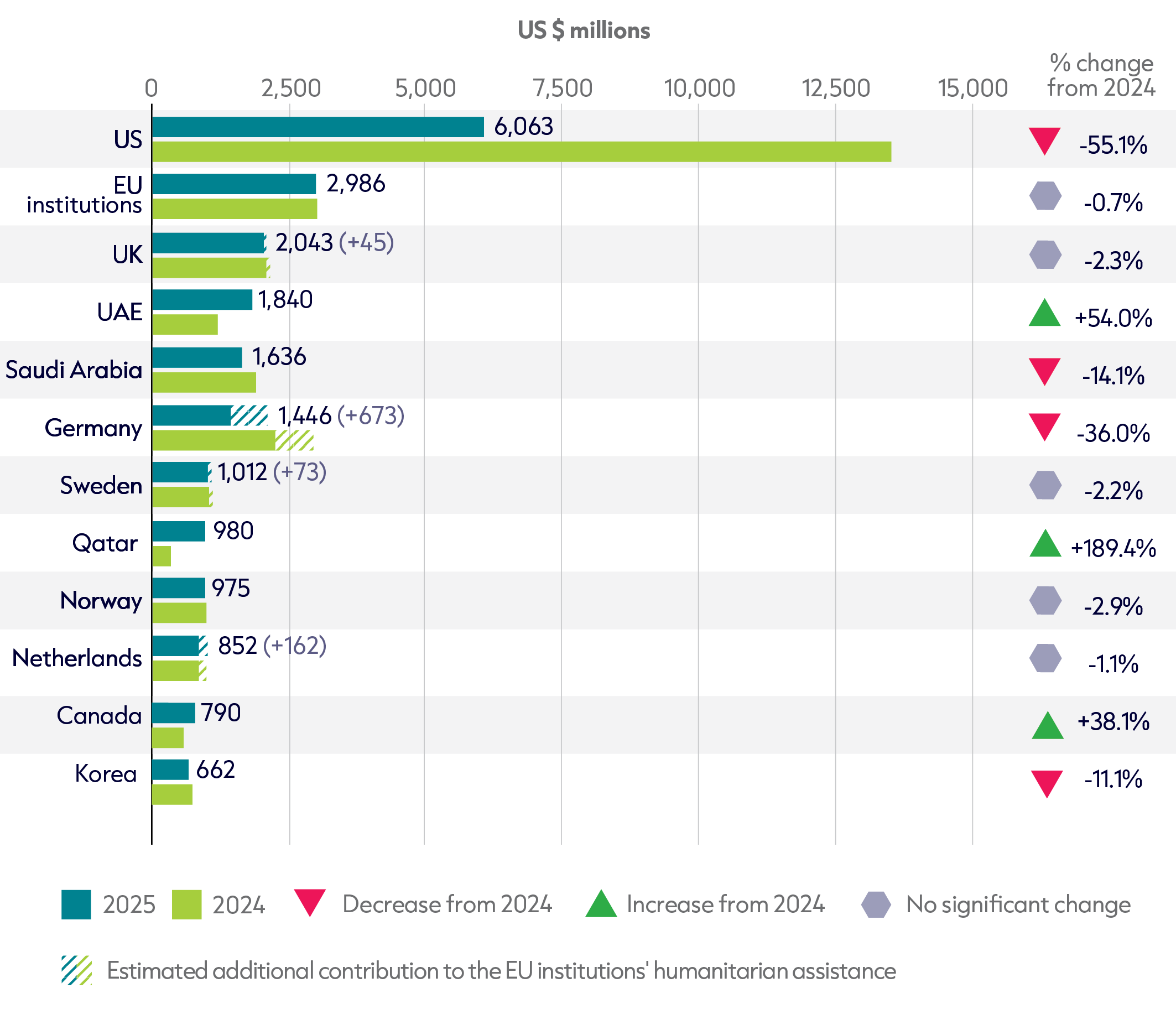
The US and Germany made the deepest cuts, together accounting for 88% of the total fall in humanitarian funding in 2025. The US made the largest cut, reducing its contribution by 55%, from US $13.5 billion to US $6.1 billion. Germany cut by 36%, from US $2.3 billion to US $1.5 billion. Private funding followed the same pattern as public funding, falling every year for the last three years, and contracting by 40% from its peak in 2022. Aid agencies hoping that private donors would make up the shortfall from governments are left wanting.
More cuts are coming but the worst is likely over.
Based on the partial information we have available on donor budgets and the wider context, optimistic and pessimistic projections have been modelled to set out the likely range within which 2026 levels of funding will fall. In the more optimistic scenario, reductions stabilise at a modest 2% below 2025 levels. In the more pessimistic scenario, cuts reach a further 11%. This means public donor funding could contract by 39% since its 2023 peak. Given the anticipated impacts of the Iran war, not least on Gulf donors, there is certainly cause for concern towards a more pessimistic scenario.
Top donors are moving in different directions, shaking up the funding landscape.
The different trajectories of the top 20 donors in 2025 drove a greater shift in the funding landscape last year than in any other year of the past decade. The dominance of the top four donors declined as their share of total funding fell, while a range of donors moved up and down the rankings. Seven of the top 20 donors cut funding by more than 10% compared to 2024: the US (–55%), Germany (–36%), Japan (–29%), Türkiye (–18%), Saudi Arabia (–14%), France (–11%) and South Korea (–11%). However, six donors notably increased funding in 2025: Qatar (+189%), the United Arab Emirates (UAE) (+54%), Canada (+38%), Italy (+15%), Switzerland (8.5%) and Ireland (+6.6%). Another six donors remained relatively stable at –/+5% compared to 2024 funding.
The majority of top donors cut humanitarian funding in 2025
Source: Based on OECD DAC, UN OCHA FTS and UN CERF.
Notes: 2025 data is preliminary. Data is in constant 2024 prices. ‘Public donors’ refers to governments and EU Institutions. Contributions of current and former EU member states to EU institutions’ international humanitarian assistance are shown separately. Figures for 2024 differ from the GHA Report 2025 due to updated final reported international humanitarian assistance data and a different year for constant prices.
The long-standing dominance of OECD Development Assistance Committee members among the top donors is now beginning to shift. Germany has fallen out of the top four, overtaken by the UAE and Saudi Arabia, which now rank fourth and fifth. The US share of government funding to the humanitarian system fell from around 40% to 23%, while Gulf donors rose from 10% to 17%. EU institutions slightly increased their share of total funding. Of course, the US remains the largest donor by some margin and retains significant agenda-setting power, but this fragmenting landscape has consequences. It risks divergent donor blocs pursuing parallel priorities and could cause challenges to implementing organisations caught between competing interests. Strong coordination among providers of funding has become more important than ever.
2. Crisis contexts amidst the cuts
Funding for almost every major humanitarian crisis has been cut – in some cases by more than half.
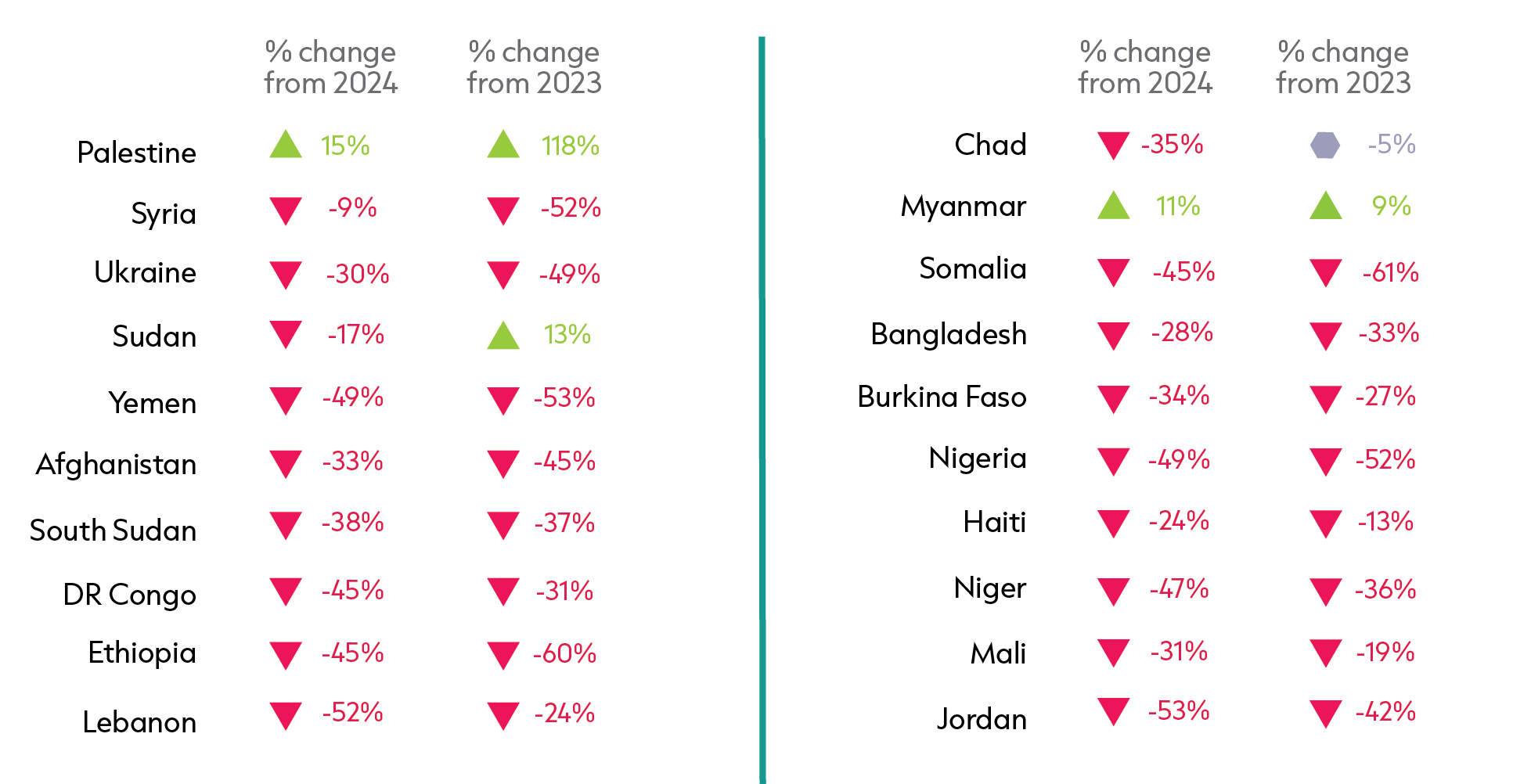
Funding fell for 18 of the 20 largest crises in 2025, with only Palestine and Myanmar seeing increases. Palestine received a 15% rise to US $4.4 billion – quadruple its 2022 level as the Gaza crisis deepened – while Myanmar funding increased by 11%. However, Syria and Ukraine continued multi-year declines, both now well below half their peak funding. Protracted crises were hit hardest – Lebanon and Jordan each lost more than half their funding in a single year, and six further countries, including Yemen, Somalia and the Democratic Republic of the Congo, saw cuts of over 40%. As resources have tightened, they have also become more concentrated – the top five recipients absorbed 51% of all funding allocated to countries, up from 43% the year before.
All of the largest recipient countries of humanitarian assistance – apart from Palestine and Myanmar – experienced funding cuts in 2025
Source: Based on UN Office for the Coordination of Humanitarian Affairs (OCHA) Financial Tracking Service (FTS) data.
Notes: Data is in constant 2024 prices. Totals for previous years differ from those reported in previous GHA reports due to deflation and updated data.
The balance of influence is shifting as the US is replaced as ‘lead donor’ in many humanitarian contexts.
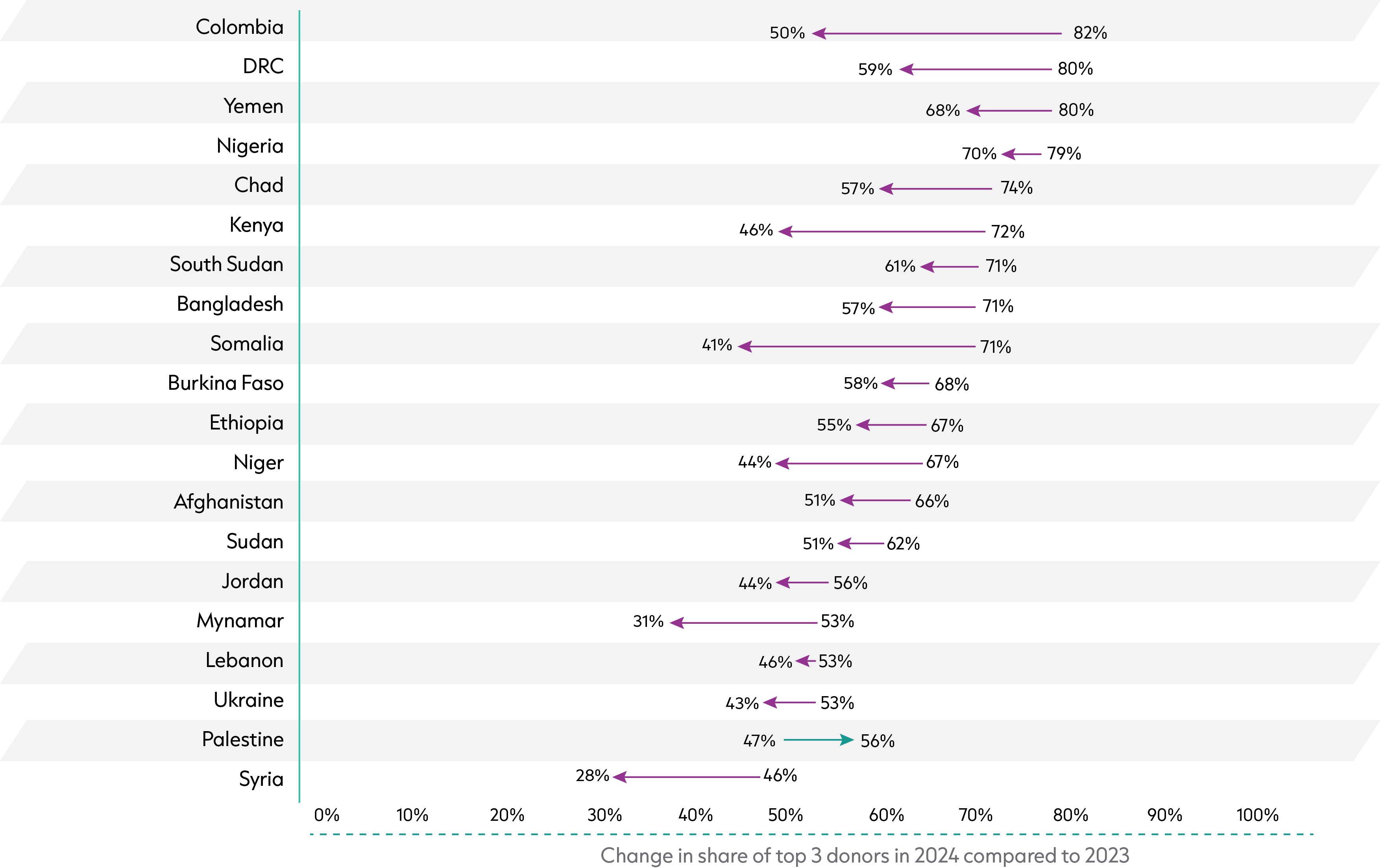
In 2025, the balance of donor influence shifted markedly across the world’s largest humanitarian crises. In 19 of the 20 largest recipient countries, the combined share of funding from the three historically largest donors declined by as much as a third, while the lead donor – the single largest donor – changed in six of these countries. The US was replaced as lead donor by EU institutions in Lebanon and Somalia, by Australia in Myanmar, by Germany in Niger, by Saudi Arabia in Syria, and by the UAE in Palestine. While the US remained the largest donor in 13 contexts, its share fell in each of them. EU institutions, meanwhile, increased their share in 18 of the 20 contexts. Gulf donors also grew increasingly prominent in conflict-affected settings across the Middle East and North Africa, most strikingly in Palestine where UAE funding more than doubled, making it the largest donor by a significant margin. Together, these shifts point to a more dispersed donor landscape, with implications for how humanitarian responses are prioritised, organised and financed depending on the ways donors choose to use their dominance.
Funding cuts from major donors have driven a reduction and shift in the concentration of donors in the largest recipient countries
Source: Based on UN Office for the Coordination of Humanitarian Affairs (OCHA) Financial Tracking Service (FTS) data
Notes: 2025 data is preliminary. Data is in constant 2024 prices. For each context, the figure shows the share of country-level humanitarian funding provided by its three historically largest donors and a residual ‘Other’ category covering all remaining donors. Figures for 2024 differ slightly from those reported in the GHA Report 2025 due to updated reporting and deflation.
The largest funding gap on record left millions of people without assistance in 2025.
UN-coordinated appeals are the funding requirements set out in interagency response plans to address needs arising from a humanitarian crisis. The amounts raised by these appeals fell for the third consecutive year in 2025 to US $16.6 billion, leaving the largest funding gap on record of only 35% of requirements met.
The consequences are severe, ranging from the suspension of food assistance to aid organisations withdrawing their country presence entirely. Millions of people in need will not have been reached with humanitarian assistance.
People in need are being erased from view in efforts to reduce appeal amounts.
Successive prioritisation processes have been implemented since 2024 to focus effort on those with the highest need and reduce UN appeal requirements. This has forced the humanitarian system to narrow who receives aid and what for. Now, millions of people risk being airbrushed out of humanitarian plans, with 152 million people being deprioritised for assistance based on a ‘hyper-prioritisation’ process in 2026. While this responds to a longstanding critique of the humanitarian system expanding beyond acute shocks to cover basic needs and services, simultaneous cuts across humanitarian, development and peace funding risk leaving growing numbers of people without internationally funded support altogether.
Almost all humanitarian funding is locked into long-running crises.
Nearly all humanitarian funding for UN-coordinated appeals (95%) went to protracted crises in 2025. A protracted crisis is defined as any humanitarian crisis that has had a UN appeal for five years or more. This is a relatively recent phenomenon – in 2016, only 54% of funding went to protracted crises. The average protracted crisis now has had a response plan in place for 15 years, showing that transitioning away from humanitarian support is simply not happening.
3. Humanitarian reform and delivery
A lost decade: humanitarian actors are still waiting for reforms promised 10 years ago.
A decade on from the World Humanitarian Summit, progress on the Grand Bargain’s reform commitments has been slow and patchy, with the recent significant contraction in funding threatening to reverse even the limited gains made. With scarce resources, organisations have shifted focus to survival over reform, and what initially appeared to be a temporary stall now looks set to become a longer term slide backwards.
The commitment to channel 25% of global humanitarian funding to local and national actors has not been met and is in reverse. Direct and indirect funding to local and national organisations was 8.7% of total funding in 2025 after falling from
US $3.5 billion in 2024 to US $2.5 billion in 2025 (2025 is based on partial data). Cash and voucher assistance also fell in absolute terms, but rose as a proportion of total humanitarian funding, proving more resilient to overall cuts. One area of positive change is anticipatory action – funding that is activated between a shock warning and its impact. The volume of anticipatory funding available has grown to become equivalent to 1% of total humanitarian assistance for the first time. However, its expansion to reach more events means that available resources disbursed per activation have more than halved over the past two years. This is resulting in thinner coverage across a growing number of climate crises.
Multilateral organisations remained the largest recipient group, absorbing half of all direct donor funding in 2025
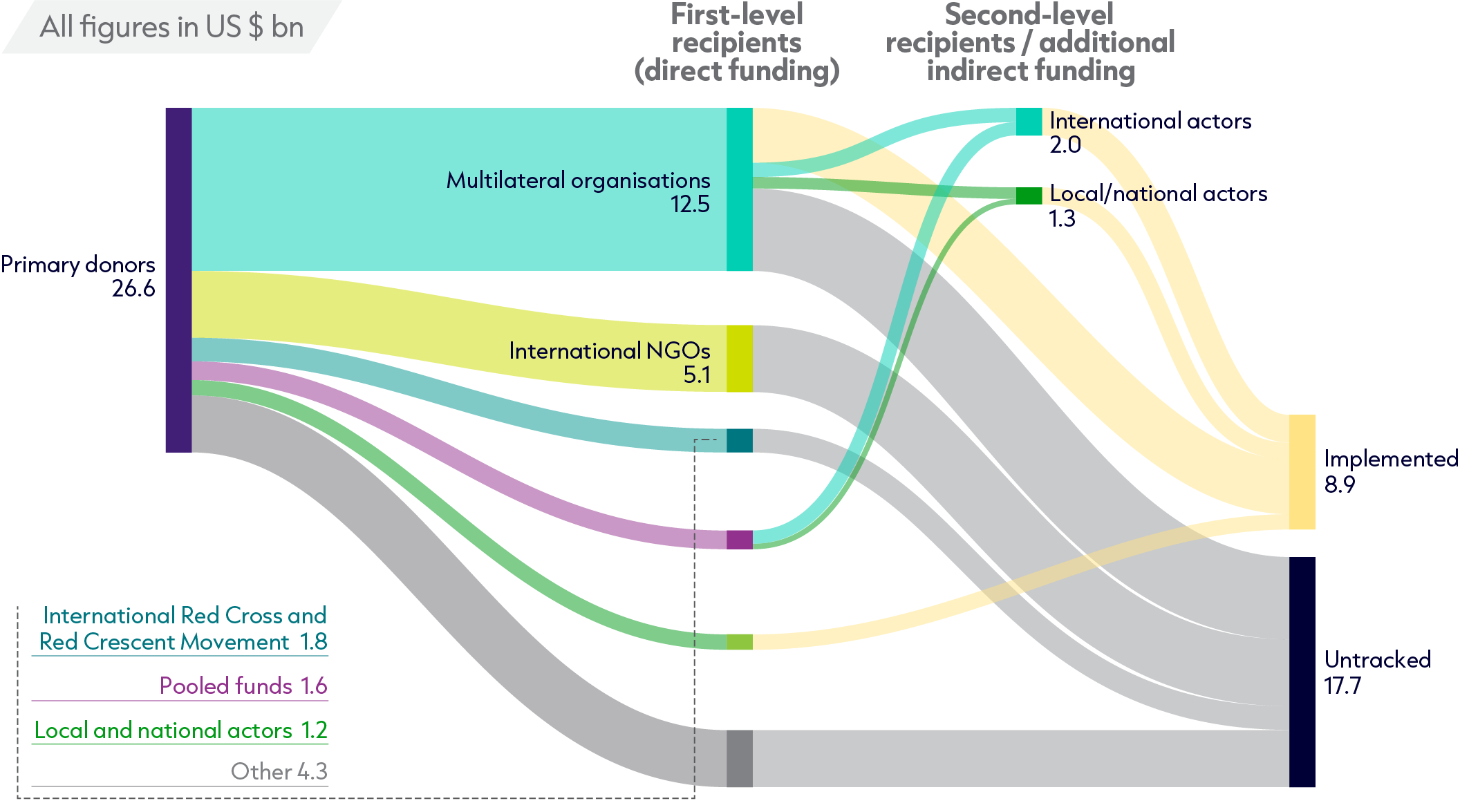
Source: UN Office for the Coordination of Humanitarian Affairs (OCHA) Financial Tracking Service (FTS), International Organization for Migration (IOM) grant awards data, UN OCHA Country-Based Pooled Funds (CBPF) Data Hub, United Nations Children’s Fund (UNICEF) Transparency Portal, UN High Commissioner for Refugees (UNHCR) Collaboration with Funded Partners.
Notes: Funding allocated by UN agencies with partner data (IOM, UNICEF, World Food Programme (WFP) and UNHCR) in each year are taken from their own reports where available. The total displayed for pooled funds is equal to allocations as opposed to contributions, which is lower; this has then been reconciled at the primary donors’ level. Data is in constant 2024 prices.
US influence over UN-led pooled funds has risen dramatically.
A notable area of development in the delivery of assistance concerns pooled funds. After the shutdown of the US Agency for International Development (USAID) and major cuts to US humanitarian spending in 2025, the US Department of State announced contributions totalling nearly US $3.8 billion to UN-managed pooled funds for 2026 – up from zero in 2025. This represents a dramatic shift in how the US channels its funding, away from a traditional mix of UN agencies and NGOs and towards UN Office for the Coordination of Humanitarian Affairs (OCHA)-managed mechanisms. The US now accounts for a disproportionately large share and influence in the pooled funds system despite its reduced overall footprint as a humanitarian donor. In some countries, US contributions represent the entirety of pooled-funded resources. Such a concentration of funding through OCHA has also shifted its role from system coordinator to fund manager and gatekeeper.
This has significant implications, not least the evolution of a two-tiered system within pooled funds. US-funded projects favour large UN agencies, carry shorter implementation windows, and favour material and in-kind projects such as food security. This stands in stark contrast to projects funded by all other donors that have a stronger preference for local organisations, longer term grants, and sectors such as protection and health. What is more, by limiting funding to just 18 of the 30 countries eligible for pooled funds, the US is actively excluding many countries with high humanitarian needs from access to resources. Early data for 2026 is already showing adverse impacts for localisation. Only 7% of pooled funds have been allocated to national NGOs in 2026 so far, compared with almost 46% of pooled funds in 2025.
The US contributed significant volumes of its humanitarian assistance via UN-managed pooled funds in 2026
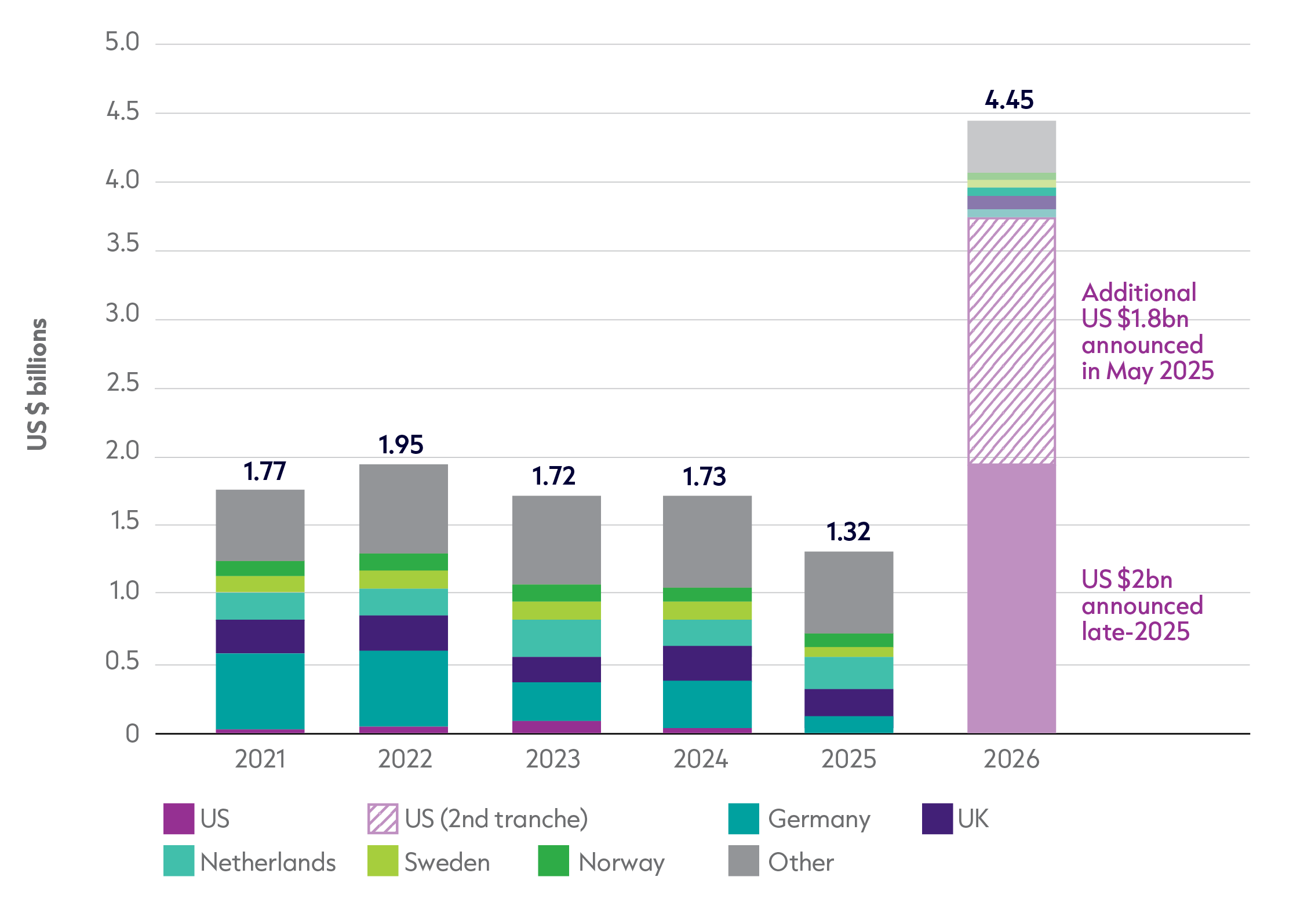
Source: UN Office for the Coordination of Humanitarian Affairs (OCHA) Country Based Pooled Funds (CBPFs) and Central Emergency Response Fund (CERF) data hubs.
Notes: Data is in current prices. Based on contributions data to UN-managed pooled funds. 2026 data is preliminary.
It is time for a radical rethink.
The range of pressures on humanitarian responses has prompted broad calls to rethink the design of the Grand Bargain and build a new vision for humanitarianism itself. Both the Advisory Panel on the Future of Humanitarian Action and the Lancet Commission on health, conflict and forced displacement have put forward proposals that include countering international monopolies on humanitarian action and the creation of a non-UN-led pooled fund among a range of approaches to promote justice, equity and accountability. A decade on, the momentum behind the original World Humanitarian Summit is conspicuously absent, and for new proposals to translate into action will require the rebuilding of political will. This is a challenge that, no matter how significant, must be met.
We want to hear from you
Share with us your insights on this year's report: The Global Humanitarian Assistance report 2026 survey